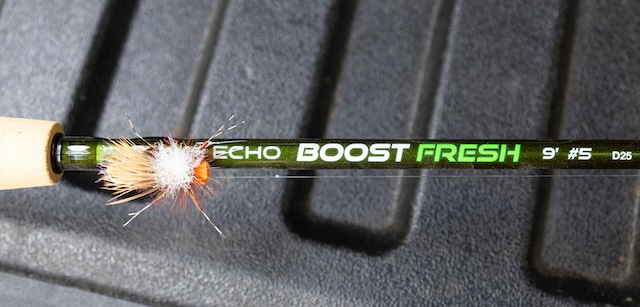
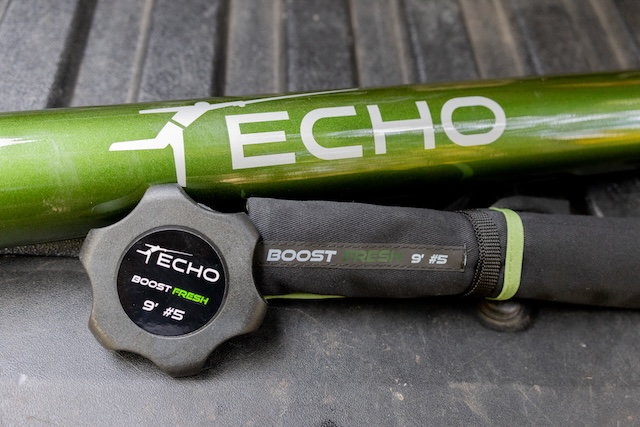
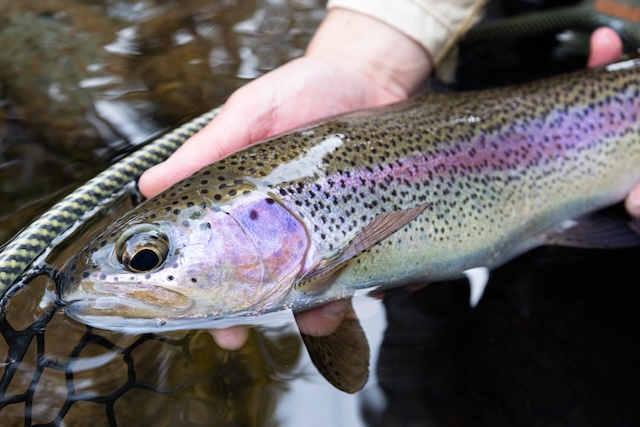
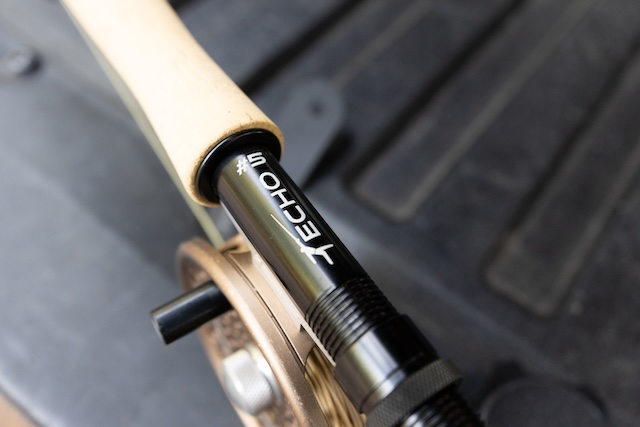
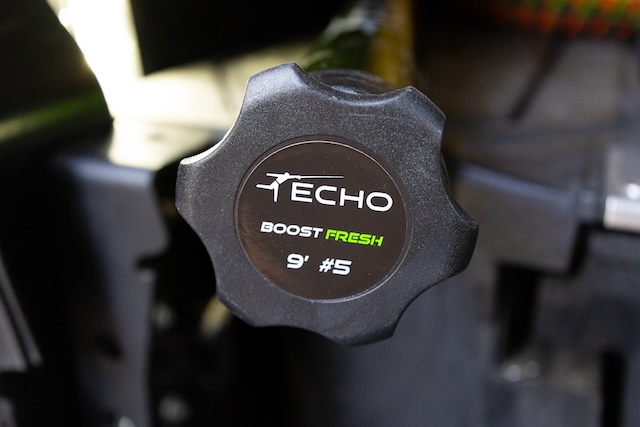
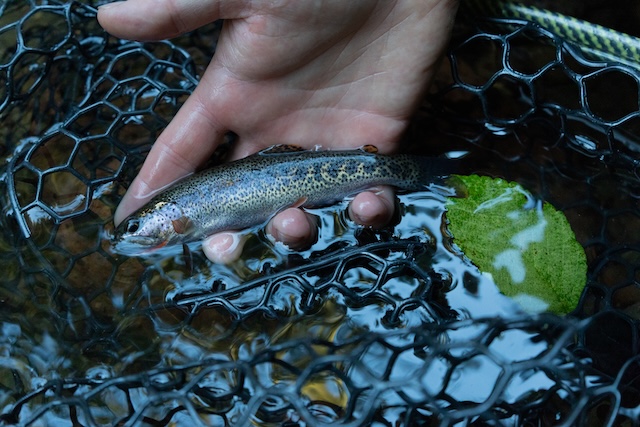
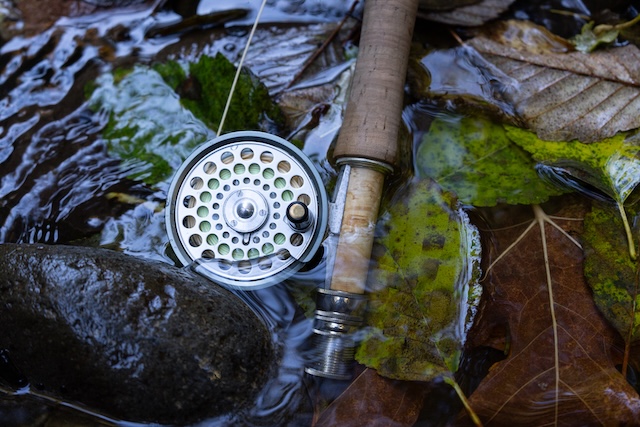
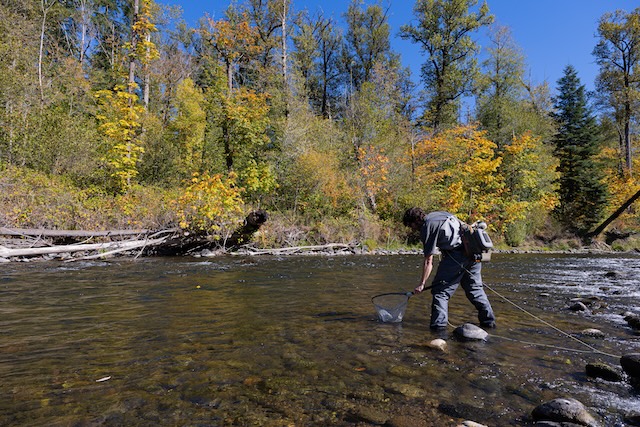
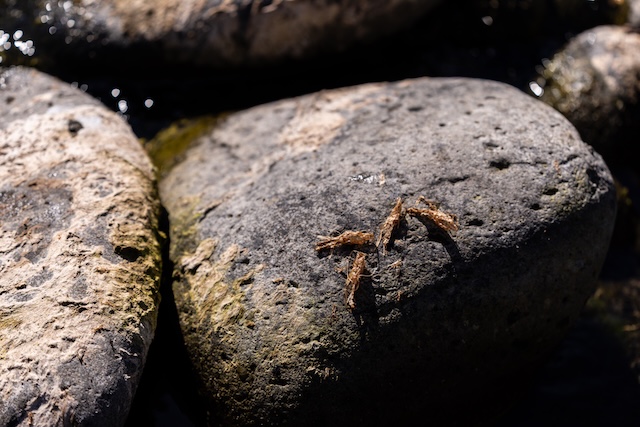
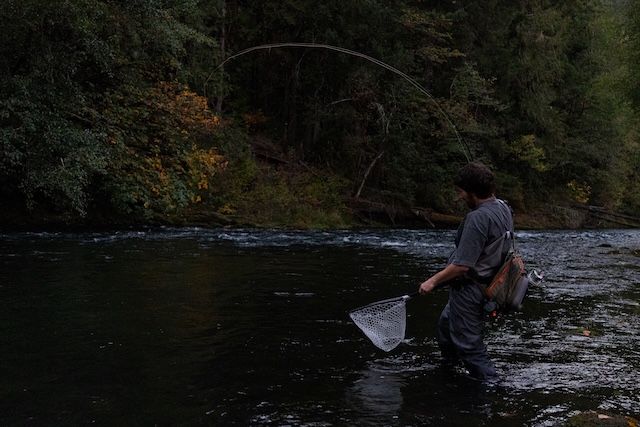
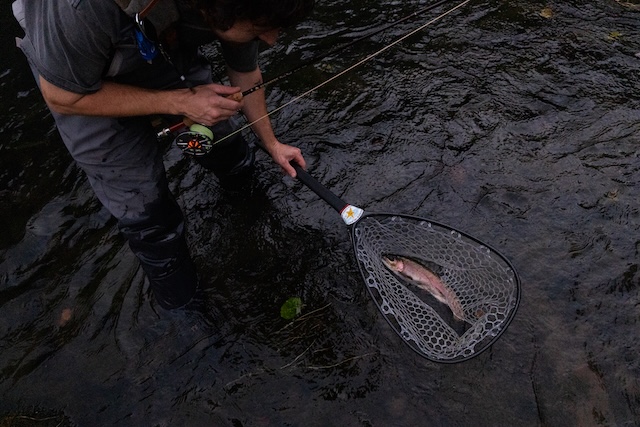
This fall, I have been fishing Echo’s Boost Fresh and am extremely impressed at the rods capability and feel given its price point. This rod has done everything I’ve asked it to and then some. It very well may be the sleeper agent amongst the plethora of mid priced fly rods. It certainly is one you should know about and give a wiggle the next time you’re in the shop.
Echo is a phenomenal company local to our very own Pacific Northwest. They are notorious for creating rods that punch high above their price point making them a popular option for a variety of anglers. The Boost Fresh in hand feels like a rod twice its price, pair that with Echo being a local NW company and them providing a great warranty, and its no wonder why everyone talks about them in such high regard.
The Boost Fresh is Echo’s mid priced, medium-fast to fast action fly rod. They come in weights 4-6 in 9′ models and they do have. assort, fast 8′ 4wt for tight creeks. I personally have fished the 6 and most recently the 5 and am convinced it is a hidden gem among mid to entry level priced fly rods.
The action of the Boost Fresh is capable of whatever you throw at it. When designing a rod, blank designers have to manage the delicate balance of power and feel. Too much power and you lose fee, too much feel and you lose power. The Boost Fresh has significant power putting it in the medium-fast to fast category. While it does not have the tactile feedback of a softer Winston, it does have enough feel for anglers to feel “in tune” with this rod when using it.
The particular balance of power and feel that they chose for this rod really shines when thinking of what the rod is built for. As an entry to mid priced rod, it needs to be capable of a wide array of techniques. I’ve been fishing this rod with cumbersome nymph rigs made up of 2 5/32 or 3.8mm tungsten beads at times and large dry dropper rigs and the rod has enough power to turn cumbersome rigs over. I also have spent days on the water fishing this rod with a single dry, and it can delicately present a small #18 Blue Winged Olive if needed. Streamers are no match too, modest sized weighted streamers turn over well with the right line.
As for lines, I fished our favorite Textured Infinity in a WF5F from our friends at Scientific Anglers. If you are not familiar with this line, it is our most recommended line in the shop. It, much like the Boost Fresh, is capable of a wide range of techniques making it a good match for the rod. It has a powerful head that is the right balance of power and delicateness, it is not a short shooting head, but also is not an extra long dry fly head.
A wide range of other lines would preform excellent on this rod depending on how you intend to use it. I still recommend the Scientific Anglers Infinity for the most versatile line to use on this rod that keeps your options, technique wise, the most open. If you want a dedicated dry fly line, consider the Scientific Anglers Trout GP. If you are looking for a good sink tip line for our local waters, the Scientific Anglers Sonar Titan Sink Tip is a phenomenal option, it comes in a Sink 3 and Sink 6.
Mentioned above was Echo’s top-notch warranty. If there is ever anything wrong with your Echo rod, Echo is extremely responsive and will help you however they can. Everyone knows fly rods eventually break, and it is almost never on a large fish. Car doors, trees, catching on something in your garage, etc. always does that first section in. Echo has a great program where you can purchase a trip section for your rod. If you’re local in the northwest, they typically show up in a few days, which gets you on the water quicker. You also can proactively order replacement tips before having an issue, too.
The inherent traits of the Boost Fresh make it a very popular option for beginner anglers to upgrade to. Coming in at $375, most people are willing to spend that once they have spent enough time on the water to determine they enjoy fly fishing. If they broke their beginner rod from a kit, hand me down, etc. it sits at a great price point where it is not a $1,000+ rod, but most certainly outperforms what they started with. Being capable of just about everything, it makes it a great investment that will be used in a wide variety of settings. It also makes a phenomenal second rod to carry on the bank. Having a dedicated dry and nymph stick saves you time on the river.
We have so many great things to say about the Boost Fresh, if you are considering it, swing by the shop and check it out. Our staff in the shop is happy to share their insights and tell you more. If you happen to be out of state, give us a ring, we are happy to talk you through it and see if it is the right stick for you.
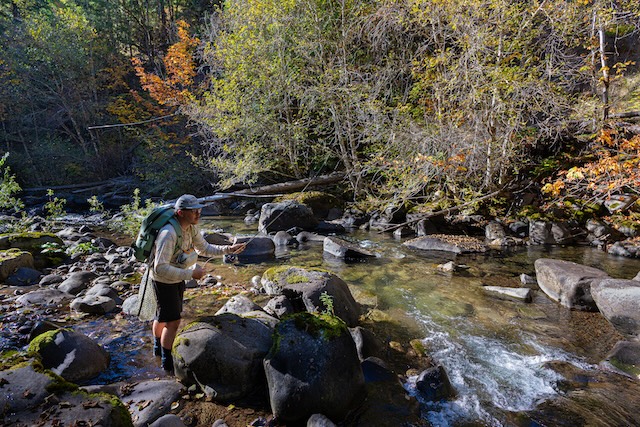
Nick exploring a tiny blue line enveloped by a radiant canopy with a 4 wt in hand.
Fall seems like it has finally shown up. We are seeing our familiar fall faces in terms of our 6 legged friends. Afternoon/evening hatches of October Caddis, Mahogany Duns, Blue Winged Olives, Small Stones, Assorted Small Caddis and Noctournal Stones can be heavy at times. The leaves are turning, days are becoming shorter, and the trout are getting happier by the day. It is a fantastic time to get out on our local waters and fish.
Conditions, as you all have experienced this year, have not necessarily been poor, just different. The timing for hatches seems a tad off, water is low, fish are holding in different areas of the river, etc. It has a been a phenomenal year to experiment, explore new sections of water, and try new techniques when old ones don’t work. At this point in the year, water is lower than usual and fish have their guard up despite the resurgence of aquatic insect hatches, sizing down your offerings and tippet has seemed to make a huge difference.
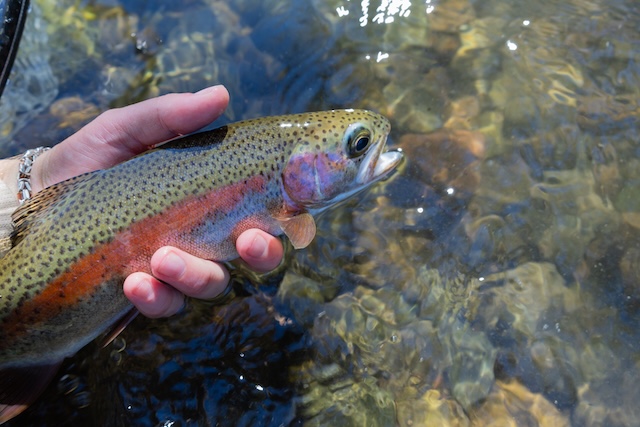
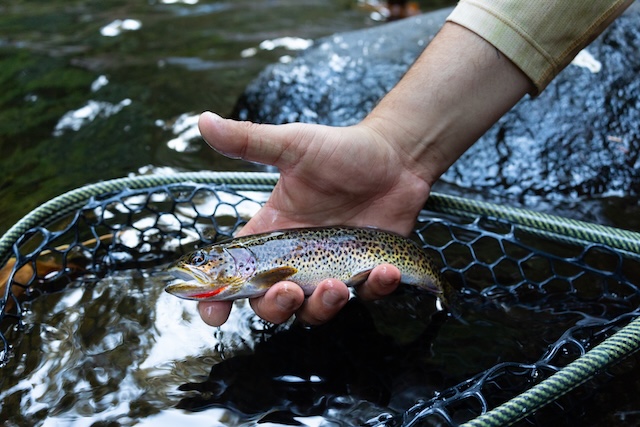
October Caddis eating wild rainbow.
With the weather holding out, we have been exploring a good bit of smaller water this fall using smaller rods. Being enveloped by the colorful canopy on a tight stream fishing dries is a great way to spend an afternoon with a 2-4wt in hand. The colors of these small stream residents rival the fall leaves above. This year with the unseasonably warm fall, offers anglers the opportunity to explore small streams sporting their fall colors while wet wading, if you need a little bit of extra warmth while wet wading consider Backcountry Skinz. Spending a day on a small stream will bestow anglers with endless dry fly eats, and a slower paced fishing session.
Current Hatches
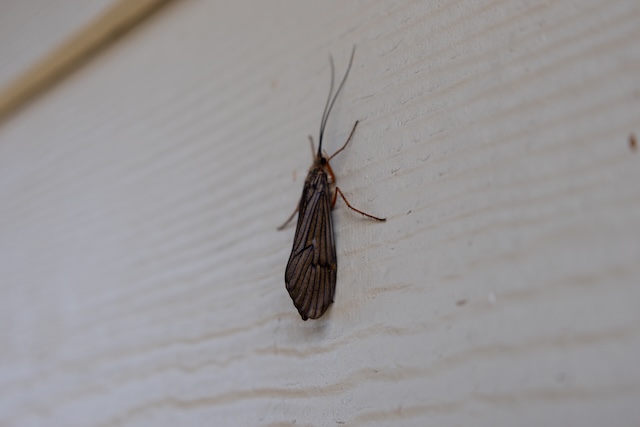
We are starting to see our typical fall faces as things cool off. First off, the mighty October Caddis, which is one of the largest of the year, is making its appearance on overcast days, and especially in the evenings. If you aren’t seeing the winged adults, there are likely pupae on the move. These pupae emerge overnight, typically, or in low light. While you won’t be swinging October Caddis pupae overnight, the fish will remember feeding on them the evening prior, and will gladly take a beaded pupae subsurface. Aside from the xxl October Caddis, in the fall we see a variety of assorted Caddis in sizes 12-16 that fish will gladly rise for.
The king of fall: the mighty October Caddis, or “Great Autumn Sedge”.
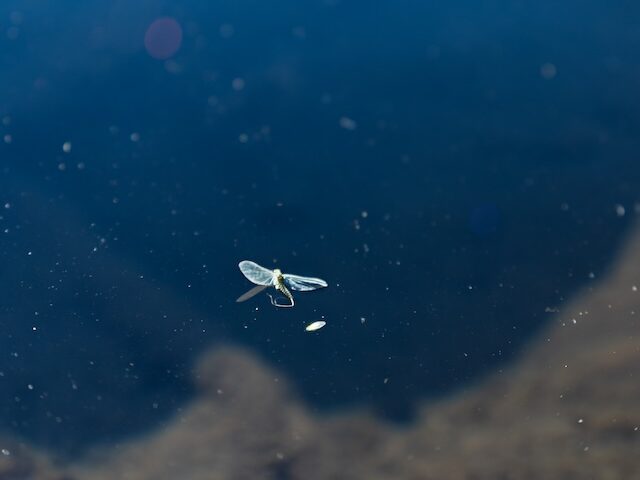
Mahogany Duns are a significant food source for trout in the fall. These smaller #14-16 Reddish colored mayflies are the most prolific hatch in the fall of mayflies and fish get very keyed in on their afternoon/ evening emergence. The other fall mayfly that hatches in abundance are Baetis sp. or Blue Winged Olives. These are typically smaller and this hatch will persist intermittently through next spring. When they hatch side by side, I’ve found that fish typically are take mahoganies, but not always.
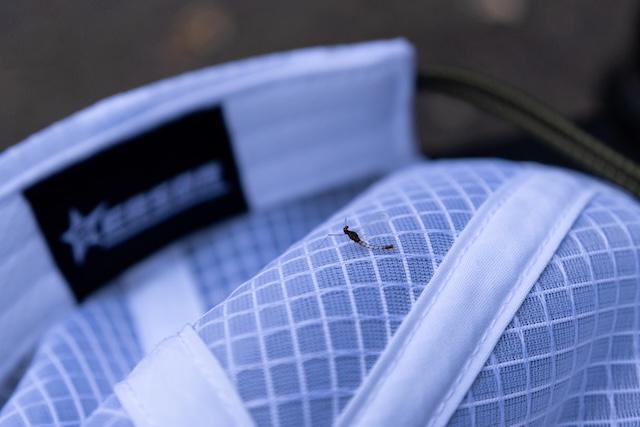
A male Mahogany spinner sized #16-18. The males are small, have a clear abdomen, and sport large turbinate eyes. Female spinners are larger #14, and have solid mahogany body throughout.
The other large fall superstar that we are starting to see is the Nocturnal or Shorting Stonefly. The males of this species are flightless and smaller than the very large females. We are starting to see them upriver, and every day that passes, it seems that fish are willing to take a large chubby.
Dry-Dropper rigs are not only exclusive to large buoyant dry flies with jigged tungsten nymphs below. Running smaller, more delicate dries with unweighted nymphs, soft hackles, or small cripples can be a great way to entice chose trout to eat.
A Baetis eating resident Cutt from one of our valley tributaries.
Micah bent up on a large rainbow selectively feeding on Octobers during the evening hatch.
Streamers are an effective way to target fall trout as well. While we don’t have large, hormonal fall browns in the valley, we do have rainbows and especially cutthroat that will gladly chase down a swung or stripped streamer. Here are some we are especially fond of this time of year: Conehead Slump Buster, Gaviglio’s Minnow Bugger TSB, Bead Head Mini Bugger, Thin Mint, or an Conehead Orange Blossom Special. Swing these on a floating line across a riffle into the soft seam. If you are looking for a good sink tip line for our local waters, the Scientific Anglers Sonar Titan Sink Tip is a phenomenal option, it comes in a Sink 3 and Sink 6. Both have their place, but you can likely get away with the sink 3 for most local applications.
Additional Notes
Due to this year’s exceptionally low water, sizing down tippet and flies has been helpful to fool choosy fish. Often trout will rise to a fly on our local rivers and rarely refuse it because of too thick of tippet. We have found this summer/fall that sizing down and using fluorocarbon tippet for nymphing or dry-dropper setups is making a huge difference. Getting down to 5x and even 6x Scientific Anglers Absolute Flourocarbon is making a massive difference when running smaller Mahogany and Baetis nymphs. For larger October Caddis and stoneflies, we are running 4x Fluoro.
Said large rainbow…
When fishing these small mayfly offerings for the evening Baetis and Mahogany hatch, it can be hard to track your flies in low light. Consider trailing them behind a larger more visible fly, or using the Scientific Anglers Indicator Markers on your leader. The Glow SA Indicator Markers have been extremely useful for tracking large October Caddis dries in that last hour of legal light.
Swing by the shop and get geared up. Fall fishing is one of our favorite times of year, the fishing and scenery is fine pairing that rivals all other seasons for trout fishing. If you’re out of state, or live far from the shop, shop online at Caddisflyshop.com.
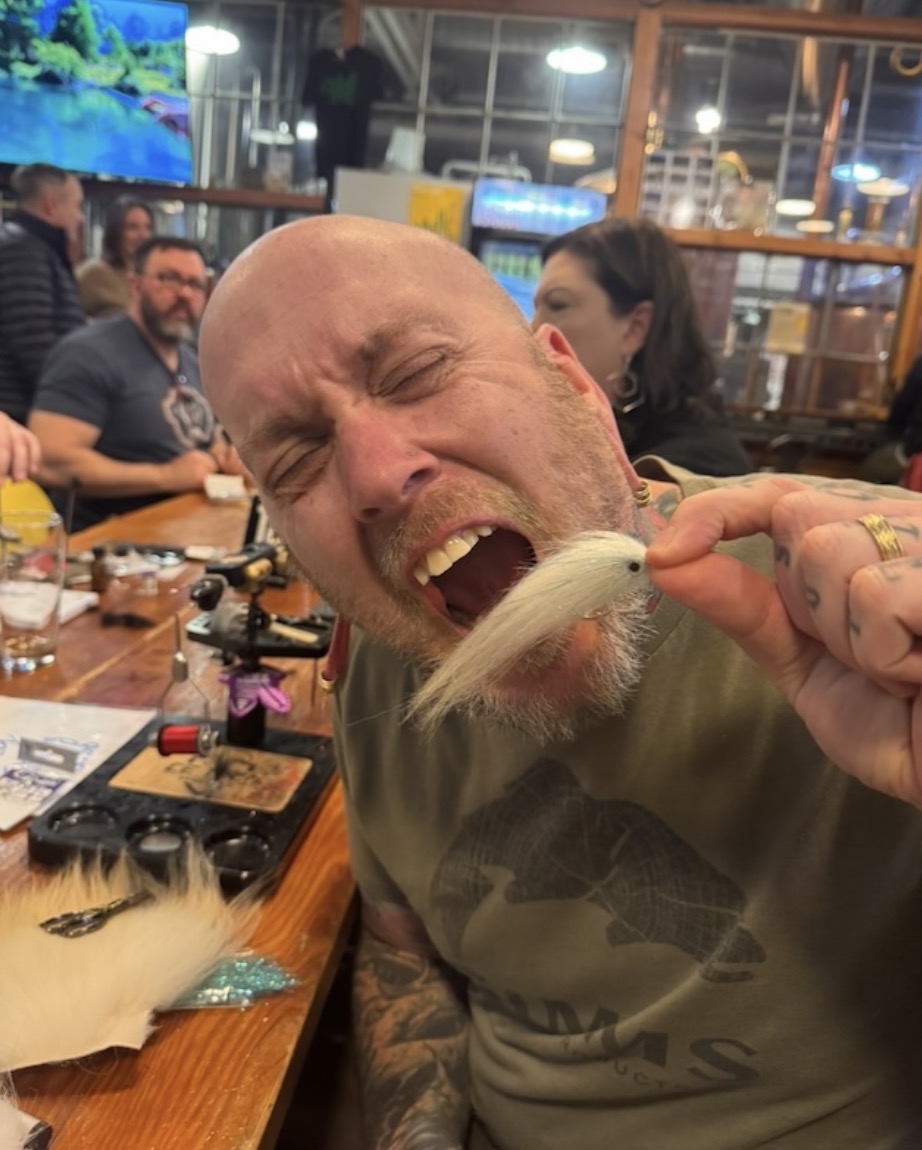
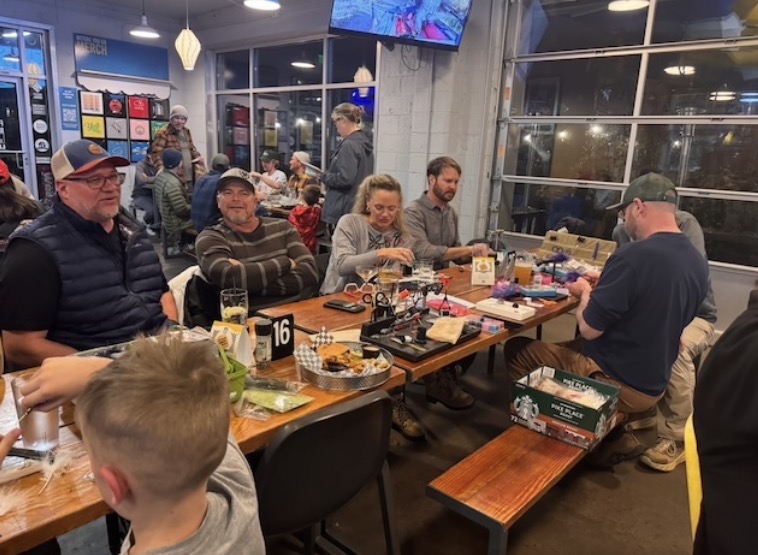
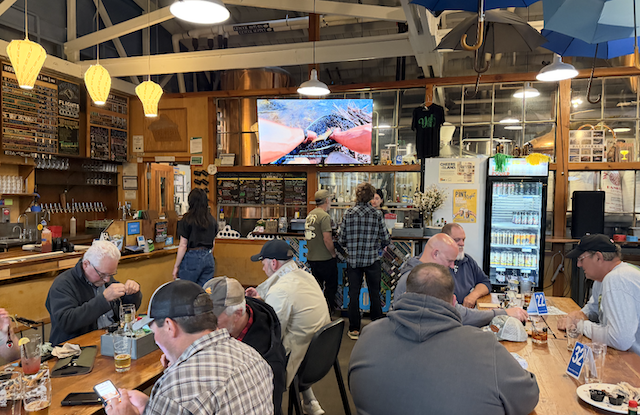
This coming Tuesday, October 20th is our monthly Fly Fishing Community Night. Every month, our local community looks forward to gathering at our favorite brewery which has hosted us for over a year: Falling Sky Brewing. Beginners and experts alike are found in the crowd that attends this monthly gathering. There are new faces each month as well as veterans that have been attending since the monthly event’s inception.
Where: Falling Sky Brewing [1334 Oak Alley Eugene, OR 9740]
When: Tuesday, October 20th at 6:00
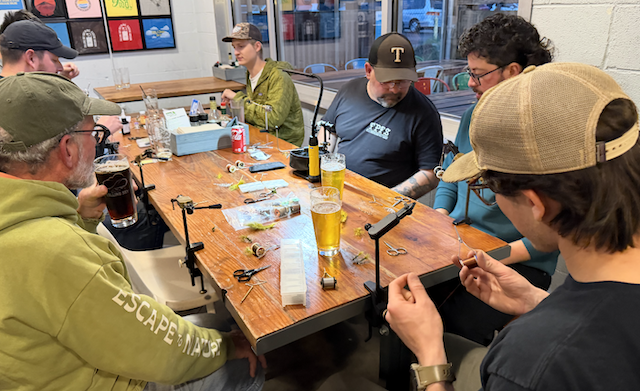
What: Fly tying, new friends, prizes, great food, great beer, fly swap, and connecting with the community.
If you haven’t been to a Community Night, you’re missing out, and we’d love to see you there. It is a great excuse to get together and talk about fly fishing, tie flies, meet new people in the community, usher in newbies, etc. We have had a massive influx of new anglers as of lat, and this is a fantastic way to meet people to fish with. See the bottom of this post for the full schedule for 2026.
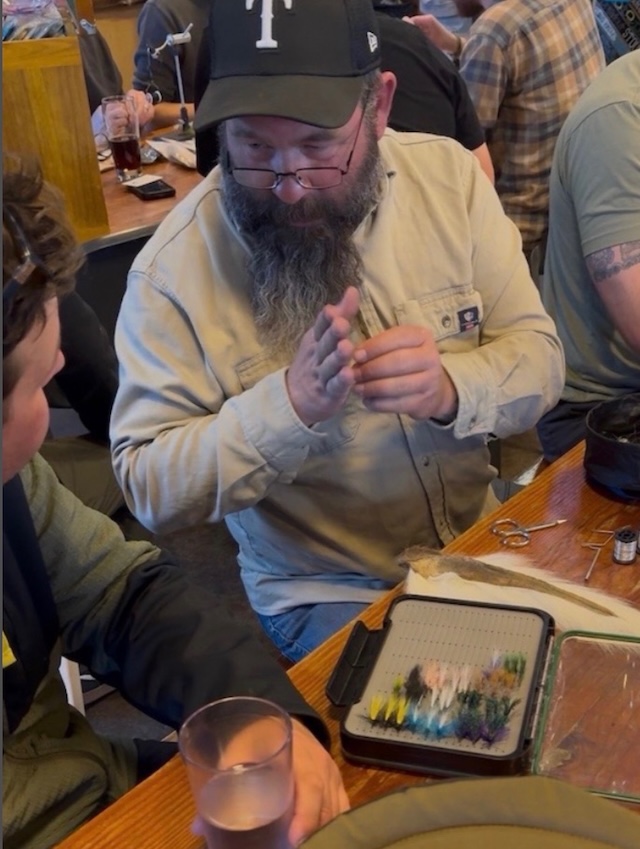
Tiers are encouraged to bring their vise and materials and tie flies if they choose. We will still continue with the monthly fly swap for tiers who participate. If you aren’t planning on tying, but want to bring a hand tied fly, you are welcome to bring one from home.
We have gotten in some gifts from our friends at Fulling Mill & Trout Unlimited that we will parcel out to those participating in the fly swap. We won’t give everything out this month, as we will stretch the prizes over the next few months but if you participate in the fly swap, you will have a chance to win something.
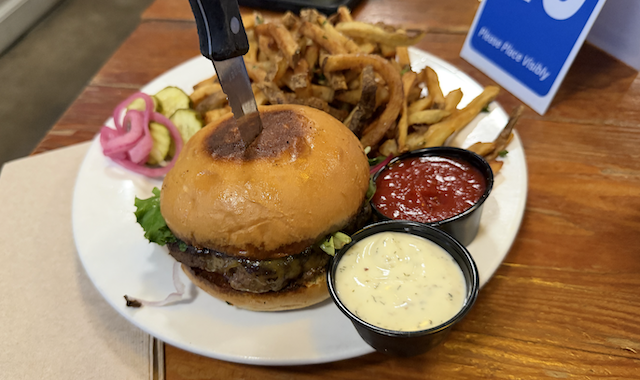
Falling Sky has great beer and some very talented chefs working hard in the back. Their burgers and sandwiches are fantastic, if you choose either of those you have to try the truffle fries. They also have a fantastic bacon loaded truffle Mac and Cheese. Stephen, the owner, has been generous enough to host us monthly for a year and a half. He is a fly angler himself and always makes his rounds. Be sure to extend your gratitude to the man who has made this happen every month for well over a year.
We can always expect our regulars to show up monthly. We also encourage new people to swing by. We have had a massive influx of new faces and new anglers, so it is a great time to stop by if you’ve been hesitant. Whether you’re a veteran to community night or brand new, we are looking forward to seeing you Tuesday!
Help spread the word, the more the merrier!
-Simon
2026 Schedule
Community Nights will typically land on the third Tuesday of each month for 2026. Some dates are subject to change, so keep a close eye for updates.
Tuesday January 20th at 6:00
Tuesday February 17th at 6:00
Tuesday March 24th at 6:00 (Initial date of the 17th changed Due to St. Patricks)
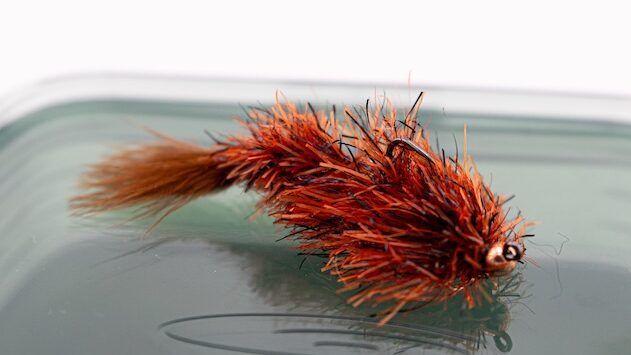
Sculpins make up a large portion of large trout’s diets. These bottom dwelling fish come from a massive family of fishes that even extend into the ocean. Our freshwater variants are a frequent snack for trout, and having a few in your box for streamer fishing is a wise decision.
As things cool off here, streamer fishing gets a massive rebound. Cooler temps help ease summer trout’s lethargy, making them more willing to move for a swung or stripped streamer.
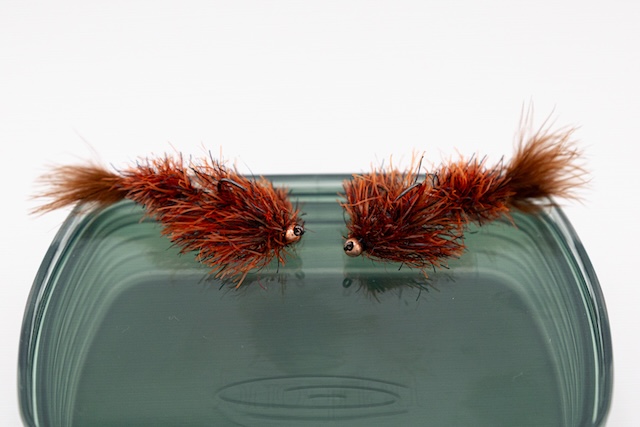
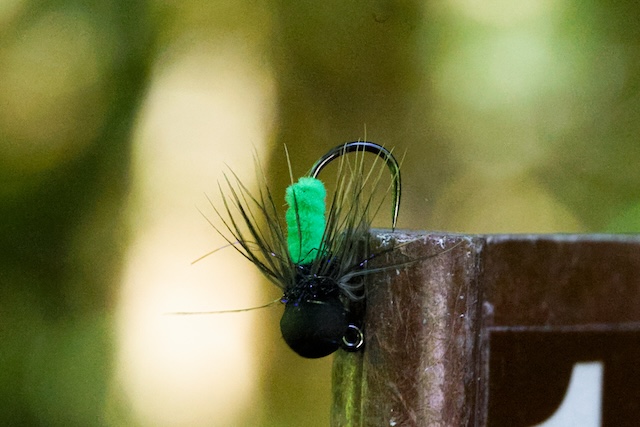
This particular streamer is jigged, so it rides hook side up. Its articulation comes from an additional shank, not another hook. This adds movement, without adding another hook which can harm fish. Typically, this is done through a trailing hook, but the issue with running an octopus hook off of a shank vs a shank off a jig is that the traditional trailer does not ride hook point up. For small to medium sized streamers, this jig articulation method works great.
The body of this fly is constructed from a new chenille from our friends at Montana Fly Co. called Senyo’s Peppered Satin Chenille. This chenille makes up the entire body of this fly and is the key to creating the large sculpin silhouette that you see. With a little help of some Medium UV Resin from Solarez, the head of the fly holds its large profile, creating the characteristic sculpin profile.
A New Statewide Effort for Oregon’s Rivers, Fish, and Communities
From Coastal Comeback to Statewide Opportunity
Oregon’s Coastal Coho comeback shows what’s possible when we invest in healthy habitat and give wild fish the conditions they need to thrive. After a steep decline in the late 1990s, Coastal Coho have rebounded, demonstrating the promise of collaborative restoration and management focused on self-sustaining wild populations.
Wild Is the Future scales the Coastal Coho Recipe for Abundance across Oregon. It’s time for a new plan that learns from an Oregon success story, not more of the same policies that waste our tax dollars and push fish toward extinction.
Investing in Workers and Communities
Salmon and steelhead face increasing pressure from habitat loss, warming weather, drought, and wildfire. Meeting those challenges requires sound investments in the rivers, forests, wetlands, and floodplains that support them. Such investments create employment opportunities for Oregonians throughout the state. Wild Is the Future would expand these investments, aiming to double Oregon’s river and stream miles primarily for wild, self-sustaining salmon and steelhead by 2040.
A Movement Built By You, With You
For three decades, Native Fish Society’s River Stewards, volunteers, and supporters have protected their homewaters and advanced solutions for wild fish and watersheds across our Great Pacific Northwest. Wild Is the Future builds on that work and the accomplishments of so many others, with a bold statewide vision.
Our campaign hub will bring together updates, resources, volunteer opportunities, and action alerts to help you share and create a growing movement to invest in Oregon’s natural infrastructure and local communities.
The Perdigon once started as a pattern, not serves as an entire family or style of fly patterns. Perdigon, which translates in French to “shot or pellet” presumably for its streamlined heavy nature. Perdigons are the topic of debate from time to time, being soulless slim bodied flies, whether you like them or not, they work extremely well.
The draw of a Perdigon is that is small and maintains a slim, tapered body, while being capable of hosting a large bead. many small flies have trouble getting deep, but Perdigons are almost always tied with large tungsten beads. This comes from their emergence from tight line or euro nymphing folks overseas.
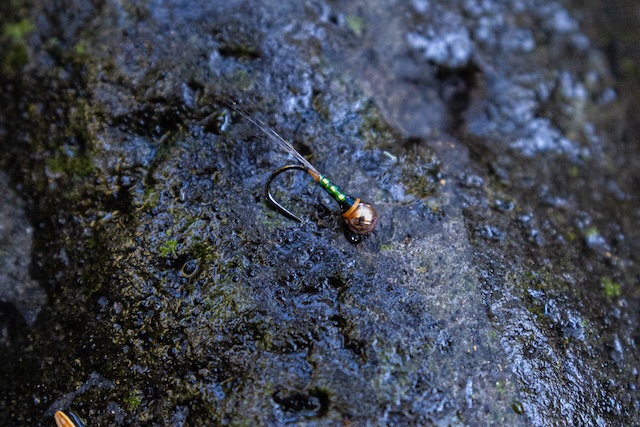
Many Perdigons have a hot collar, but this particular pattern has a hot rear too, and a flash ribbed body. Orange is a very important color in the fall and hot tags or collars of orange seem to work great to capture attention every year in the fall. Many nymphs fill with buoyant gasses prior to rising to the surface for their emergence. Palmered flash does a great job of mimicking this. This Perdigon also features a dark wing case which is also suggestive for an emerging insect.
With our low water right now, and our smaller fall hatches, this pattern has been a staple in my box. I typically fish it in a 14-18, with 16 being my most used. It is a great size for the Mahogany Dun hatch as well as the leftover PMDS. The 18s work great for the fall Baetis emergence as well. I’ve found it more important this year than ever to size down tippet as well. With our especially low water, typically I am fishing this off of 5x Absolute Fluorocarbon from SA and it is making a huge difference sizing down. Tie some up and you’ll find a big rainbow on the end of your line shortly.
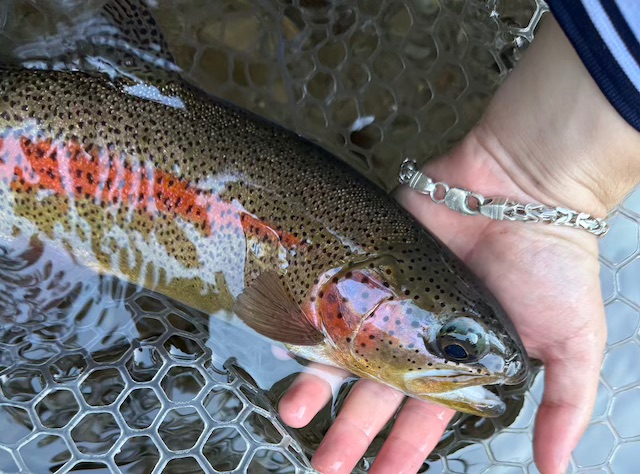
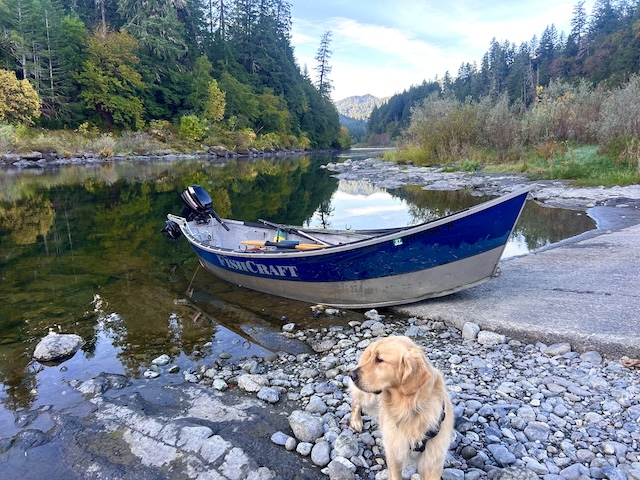
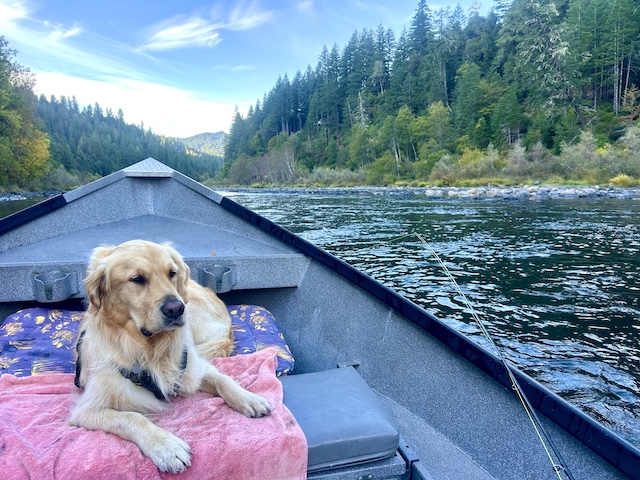
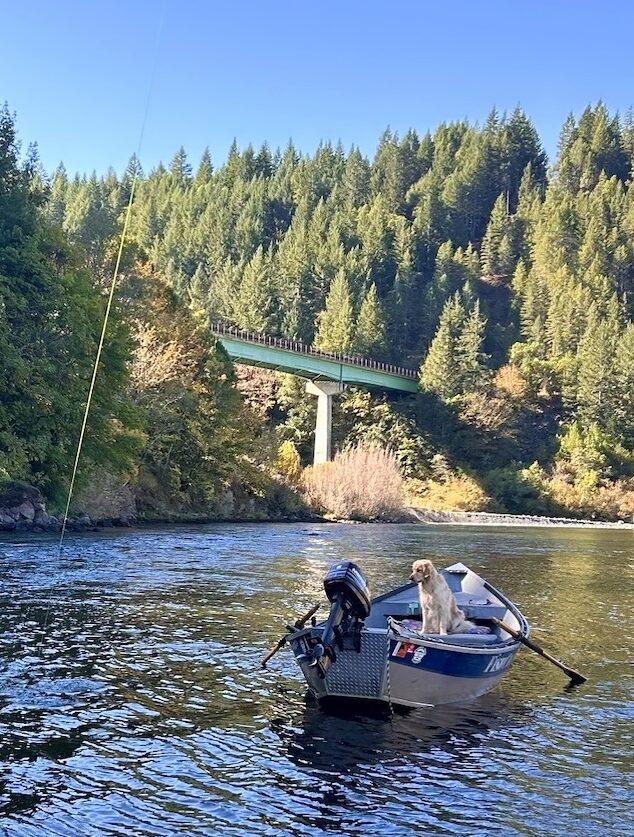
The shop dog, Jasper, and I took a long weekend down South fishing the famed Rogue River half pounder run. While I have rafted the Wild and Scenic section several times in the Summer, I have never actually fished for our unique juvenile steelies.
After the 4 plus hour drive to the Agness area I launched my boat and motored up to the first riffle. It was 80 degrees and high sun. A long-time shop customer gave me some advice that on warm days they are only in the faster, oxygenated water and he was correct.
Fished or an hour and nothing, changed flies and tactics but still nada. I kept at it and motored back up as high as I could and as soon as the shade hit the water, I hooked my first fish and boy do they hit hard.
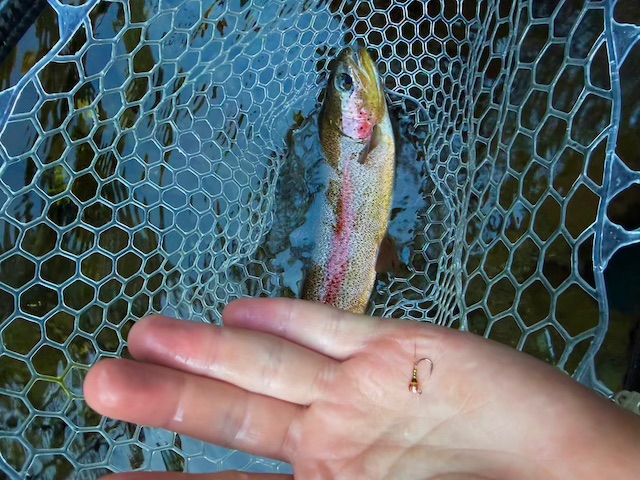
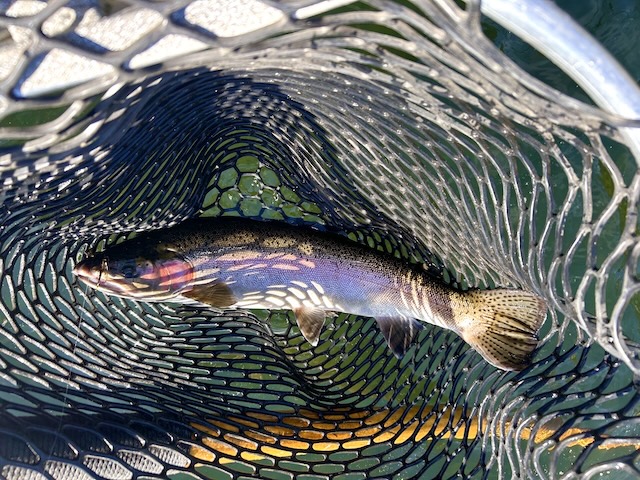
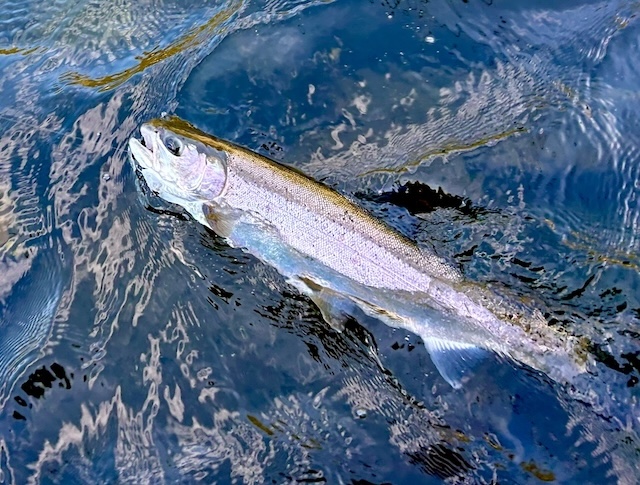
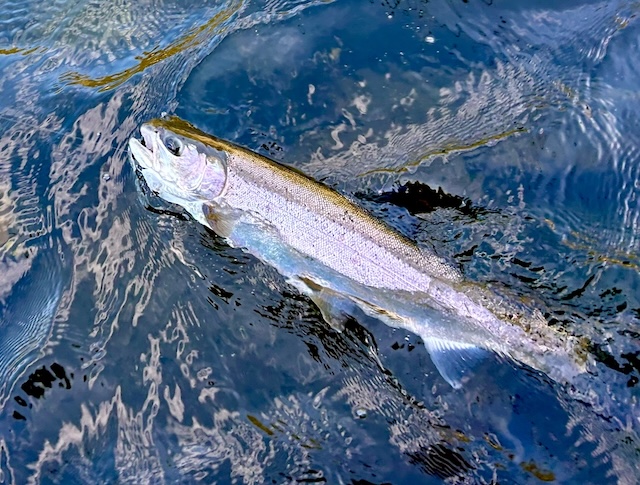
I continued down the run and landed several in the 12-15” range. Some on dead drift but most on the swing. Fished Sens 20”ers, McChickens (Hot Spot Girdle), and big bead jigged possie both under a bobber and under a chubby. Had one fish smash the chubby as well but did not hook up. These fish are so cool! Super acrobatic, strong and they truly look like miniature steelhead.
Next morning I floated from Foster Bar to Agness. Same tactics produced decent fishing, again all in faster riffles. I swung traditionals and girdle bugs in the greasy shaded tail outs and sweet looking glades with no results. Weather was gorgeous and by noon the temps were over 80 and the action slowed dramatically.
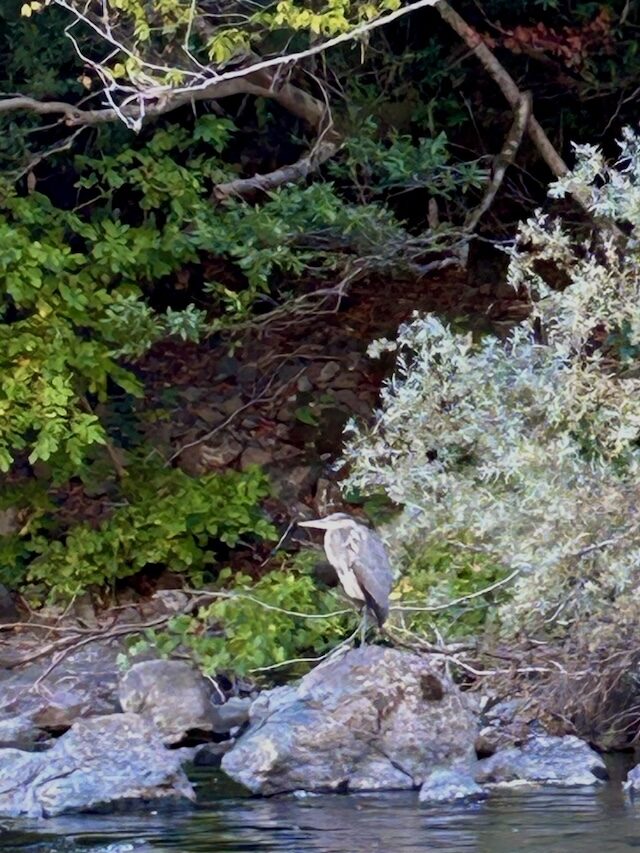
Silvers were jumping in the deep pools, Herons and Egrets were chilling and the day cruised by. By 4 I was close the end of the drift when I got to a juicy looking riffle. Slid through, rowed into position and anchored in the sweet spot. First cast landed my biggest ½ pounder and second cast a wild adult!! What a way to end the day.
Last morning I put in at Hog Eddy across from the confluence of the Illinois river. Stunning backdrop with the tall bridge over the spot. Had good action for an hour and landed another stunner. I really found out why this fishery is so storied and popular. The Fall weather and camping, stunning scenery, killer BBQ at Cougar Lane and good fishing have me thinking about next year.
If you have any questions reach out to us at the shop, we’d be happy to help.
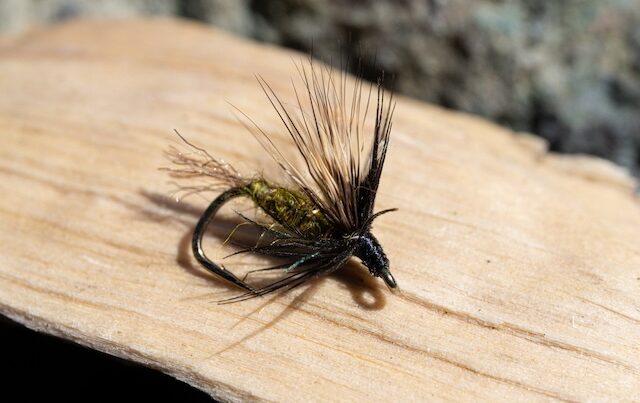
Fishing with soft hackles is one of the oldest methods of targeting trout on the fly. A soft hackle, for those who do not know, is a slim, bodied fly with a palmered, or wrapped, collar of a hackle feather towards the head of the fly. The key point about “Soft” hackle is that the feathers are soft and pulsate in the water creating much more movement than your traditional dry fly hackle. Their softness does not have the stiffness of a dry fly feather which allows a fly to perch itself on the surface tension of the water.
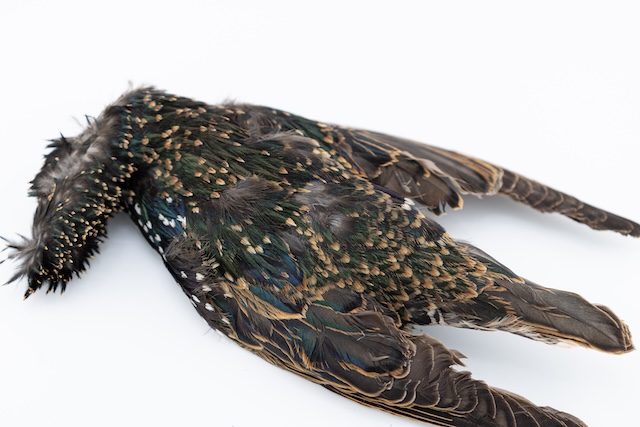
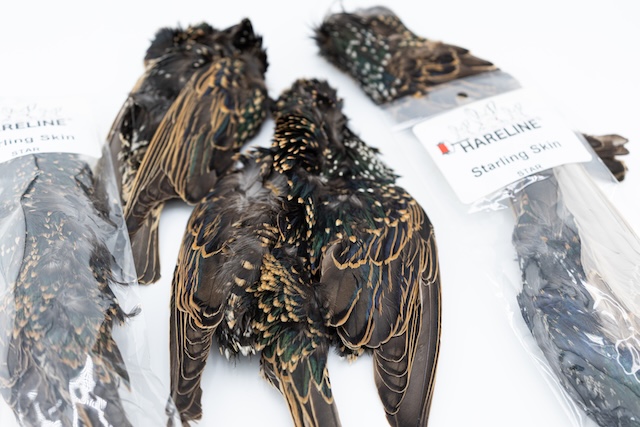
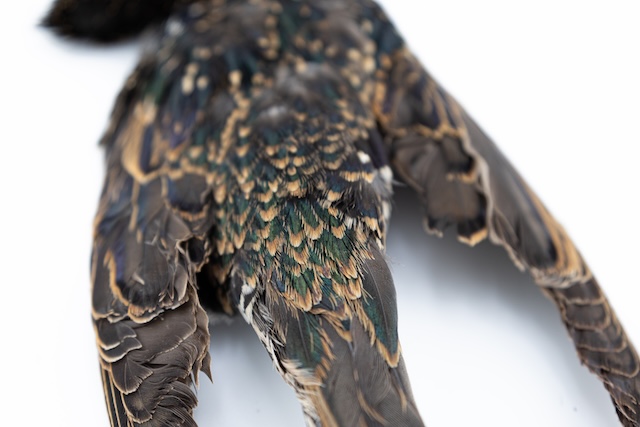
European starling is an often overlooked soft hackling material, the skins are affordable, and dense with usable feathers, so every tier should have a skin in their stash.
The European starling, as its name suggests, was brought across the Atlantic from Europe. Attempts were made in the mid to late 1800s, but it wasn’t until the late 1800s where populations were fully established in New York City. Now they are one of the most abundant birds in North America with an estimated 93 million birds spanning North America.
Starling feathers are a striking dark feather with subtle iridescent shimmering qualities that other soft hackle feathers do not have. Starling feathers have bold spotted tips ranging from bright white, to a tan, and even an orangish-gold. They molt their feathers every fall and feathers start out with striking white tips making the entire bird dark with white spots. As time passes these white spots fade into the golden tipped feathers. As a result, starling skins can vary significantly, and while all are certainly usable, people may have different preferences on what stage of their feather progression the bird was in when it was harvested.
India Hen, Brahma Hen, and Hungarian Partridge are the three kings typically when it comes to soft hackle feathers for smaller flies. Of course there are Schlappen, Chinese Saddle Hackle feathers, etc. that would fall closely into the soft hackle category, but they’re far too big for small trout offerings. In fact, India Hen, Brahma Hen, and Hungarian Partridge do indeed have small feathers, but they are typically concentrated towards the top of the skin near the nape of the bird. Starling skins, conversely, are filled entirely with especially small feathers making the whole skin usable for trout sized bugs.
Bagged Hungarian Partridge is affordable, but often requires dumping the entire bag out sifting through many feathers that are too large for small nymphs. Hungarian Partridge skins are phenomenal and by no means am I against having a skin at home, I actually would extend the statement that every tier should also have a partridge skin in their stash, but again if you tie small flies most of your usable feathers are concentrated on the neck of the bird.
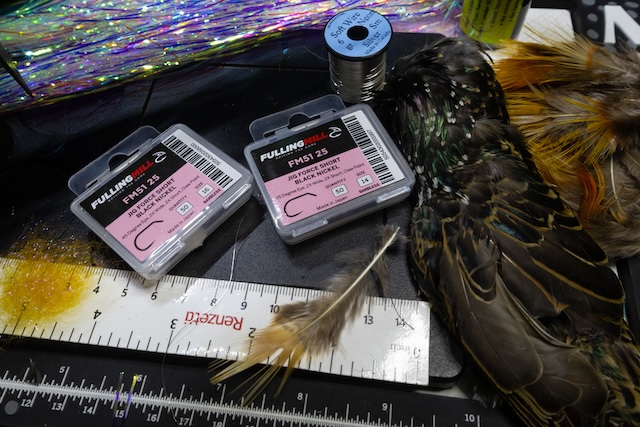
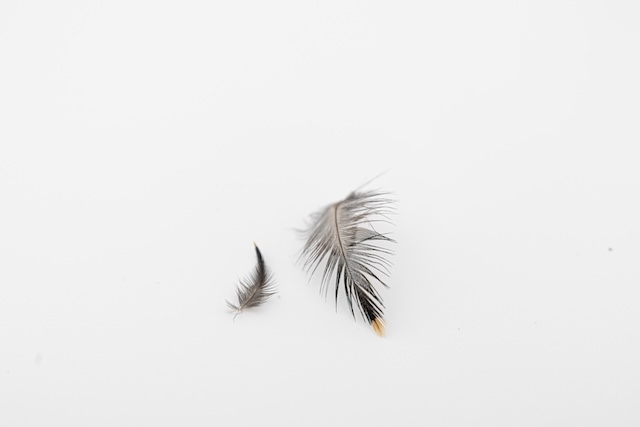
Here is a small #22-24 feather next to a large starling feather #8-10
A Hungarian Partridge skin can tie flies in the 6-20 range but the bulk of the feathers really are sized for the 8-12 maybe 14 range. The barbs off the main stem are just a tad too long for many small hackles and nymphs. They do however make great legs if you tie them in and pull them back beneath a wing case. Starling skins on the other hand can accommodate flies in the 10-24 range with most being in that sweet spot of 14-18 where most trout nymphs and soft hackles lie.
There are many parts to a feather, and all palmerable feathers must have a soft stem to wrap around a hook shank without breaking or splitting. The small fibers that branch off a stem are called barbs and this is what differentiates a soft hackle vs stiffer dry fly hackle feather. Starling barbs aren’t as long as Partridge, CDC, Brahma or India Hen feathers, making them suitable for small flies. In terms of their softness, they are softer than Brahma, India Hen and even Partridge, but not quite as soft as CDC or marabou, Starling feathers lie right between. In my opinion, this is the perfect softness and an underutilized stiffness when it comes to soft hackle choices.
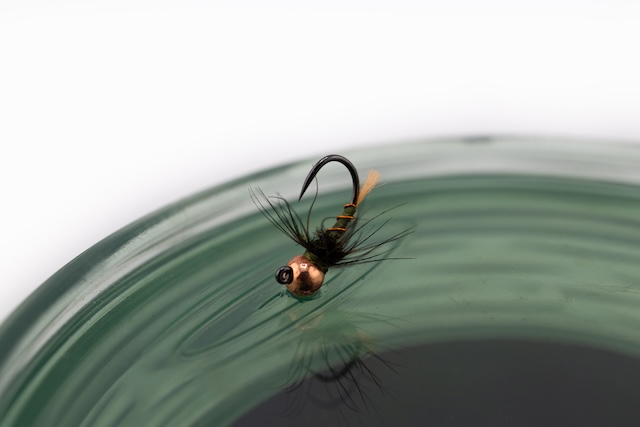
I especially love to use these feathers as a collar on small jigged nymphs. For small mayfly nymphs and caddis pupa this material really cant be beat. It is much easier to grab for a starling skin and have all of the correct sized feathers than to dig through a bag of feathers or pick through an India, Brahma, or Partridge skin. On flies where a CDC or Partridge collar is used, consider subbing it for starling.
Starling, again, is an affordable skin coming in at just over 12$ for a skin. The feathers are a dark iridescent soft hackle type feather that makes some of the best collars for small flies. For small mayfly nymphs, caddis pupa, even emergers or cripples the soft barbs on these feathers effectively mimic legs, and pulsate in the water grabbing fish’s attention. This movement is huge especially when tying soft hackles that are meant to be swung. When swung and even dead drifted the material collapses creating a perfect teardrop shape mimicking an ascending caddis pupa or mayfly nymph.
We’ve got plenty of European Starling skins in the shop, feel free to swing by and pick through them and find one to take home. If you are finding this article and you happen to live out of state, click here to shop for a skin. We will pick one and send it right to you. This is a skin that will really level up your tying abilities and opens up a lot of opportunities tying phenomenal soft hackles and nymphs.
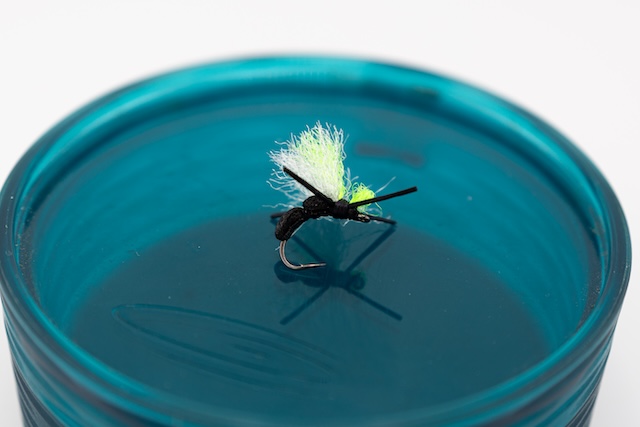
Ants are still on the menu for some time, and trout are still keeping a keen eye open for them. The issue with many ant patterns is that they are overdressed and the body profile is much larger than the ant itself. We’ve all been in shops and seen xxl ant patterns and thought “that’s a little big for an ant”. While many of these patterns work great, they are often taken as a beetle, cricket, or just a general attractor.
The ant patterns that are small often are made of natural materials and lack buoyancy on the water long term. I knew I needed a very specific more buoyant ant pattern for an upcoming trip that still looked realistic, so I set out on picking the right hook.
It may not be intuitive, but the Ahrex Super Dry is a phenomenal choice for an ant pattern. Most ants are tied on a straight shank try fly hook, but the Super Dry allows the rear abdomen of this fly to be dropped into the water suggestive of a struggling insect. The body is segmented and slim like a real ant making the pattern very realistic and able to fool large, choosy trout.
This pattern has been crushing locally on our tributaries where I’ve been testing it. In addition to black, I’ve been tying it in brown as well. For local fishing a 12 is a great size; where I am going, it may demand a smaller ant, so I have been sizing it down as well. Tie some up and take em out to our high lakes as they wake back up, our valley tributaries, or tag it behind your searching dry fly!
This coming Tuesday, September 15th is our monthly Fly Fishing Community Night. Every month, our local community looks forward to gathering at our favorite brewery which has hosted us for over a year: Falling Sky Brewing. Beginners and experts alike are found in the crowd that attends this monthly gathering. There are new faces each month as well as veterans that have been attending since the monthly event’s inception.
Where: Falling Sky Brewing [1334 Oak Alley Eugene, OR 9740]
When: Tuesday, August 15th at 6:00
What: Fly tying, new friends, prizes, great food, great beer, fly swap, and connecting with the community.
If you haven’t been to a Community Night, you’re missing out, and we’d love to see you there. It is a great excuse to get together and talk about fly fishing, tie flies, meet new people in the community, usher in newbies, etc. We have had a massive influx of new anglers as of lat, and this is a fantastic way to meet people to fish with. See the bottom of this post for the full schedule for 2026.
Tiers are encouraged to bring their vise and materials and tie flies if they choose. We will still continue with the monthly fly swap for tiers who participate. If you aren’t planning on tying, but want to bring a hand tied fly, you are welcome to bring one from home.
We have gotten in some gifts from our friends at Fulling Mill & Trout Unlimited that we will parcel out to those participating in the fly swap. We won’t give everything out this month, as we will stretch the prizes over the next few months but if you participate in the fly swap, you will have a chance to win something.
Falling Sky has great beer and some very talented chefs working hard in the back. Their burgers and sandwiches are fantastic, if you choose either of those you have to try the truffle fries. They also have a fantastic bacon loaded truffle Mac and Cheese. Stephen, the owner, has been generous enough to host us monthly for a year and a half. He is a fly angler himself and always makes his rounds. Be sure to extend your gratitude to the man who has made this happen every month for well over a year.
We can always expect our regulars to show up monthly. We also encourage new people to swing by. We have had a massive influx of new faces and new anglers, so it is a great time to stop by if you’ve been hesitant. Whether you’re a veteran to community night or brand new, we are looking forward to seeing you Tuesday!
Help spread the word, the more the merrier!
-Simon
2026 Schedule
Community Nights will typically land on the third Tuesday of each month for 2026. Some dates are subject to change, so keep a close eye for updates.
Tuesday January 20th at 6:00
Tuesday February 17th at 6:00
Tuesday March 24th at 6:00 (Initial date of the 17th changed Due to St. Patricks)
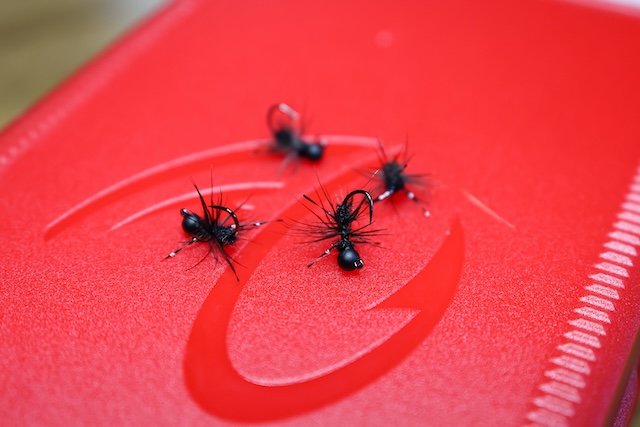
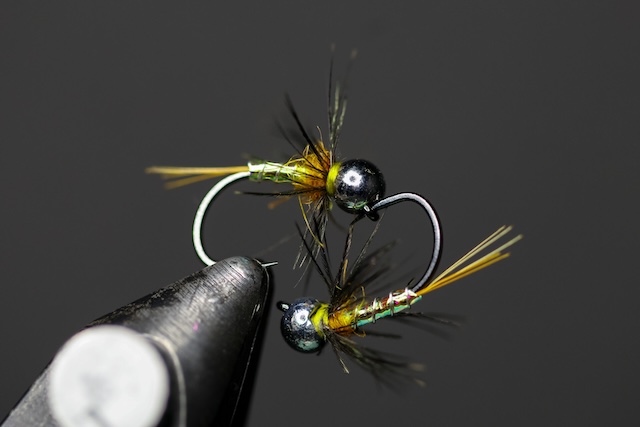
Starling is an underutilized feather in the fly tying world. It is an absolutely phenomenal choice for smaller offerings that require a soft hackle collar. Starling feathers are made of soft barbules that pulsate much like partridge or grouse, but has a darker solid color. The beauty of starling is that all of the feathers are pre-sized for smaller flies. Grouse and partridge skins have feathers sized 8-20, while starling skins are more in the 14-24 range.
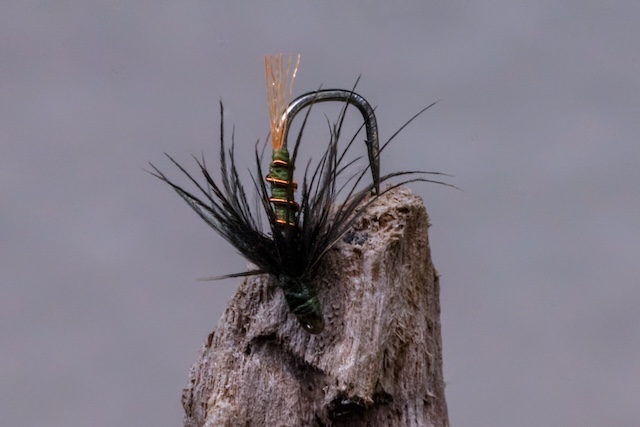
It is one of my favorite materials for soft hackles, jigs, even stillborn emergers when the pattern requires a small dark collar. One of my favorite color combinations of all time is orange and olive. It is a great combination that doesn’t have too much contrast, and can fool picky and reckless fish alike.
I like to fish this pattern when there are baetis species and caddis emerging, these hatches typically accompany each other in the spring and fall. The fly and bead can certainly be sized up or down depending on your needs. I also fish this fly in a few other colors including purple and black with the same orange wire. This fly serves as a fantastic template and colors can be swapped easily to mimic different insects. They’re quick and painless to tie, whip some up and hit the river, cooler temps are coming!
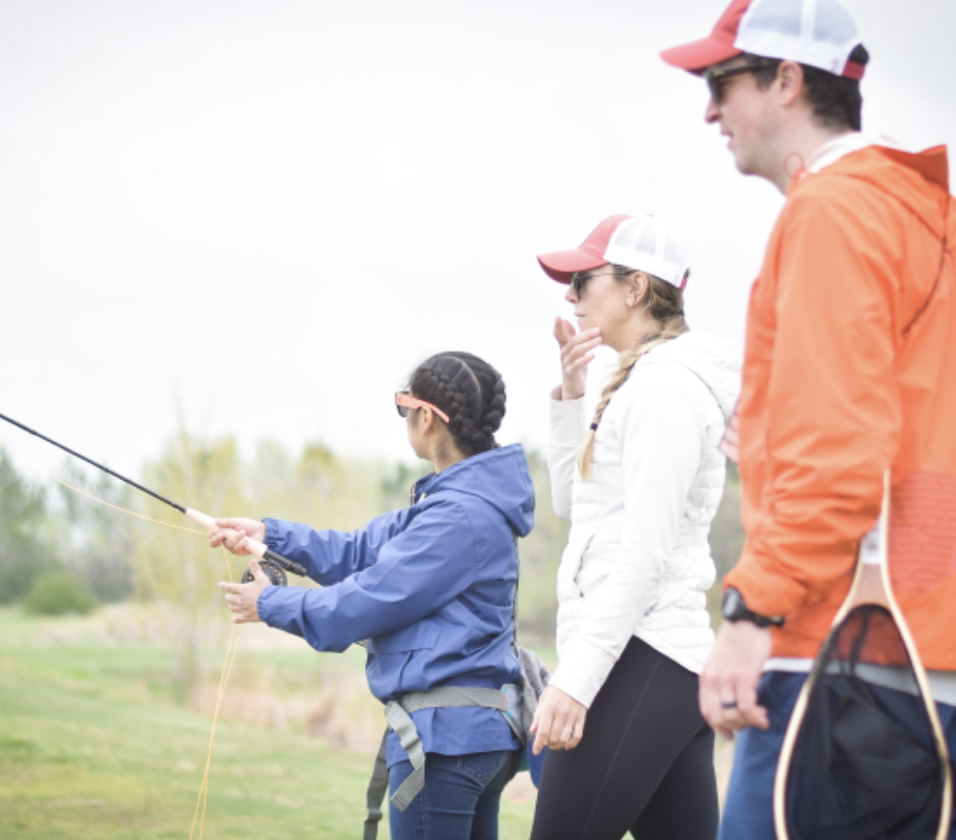
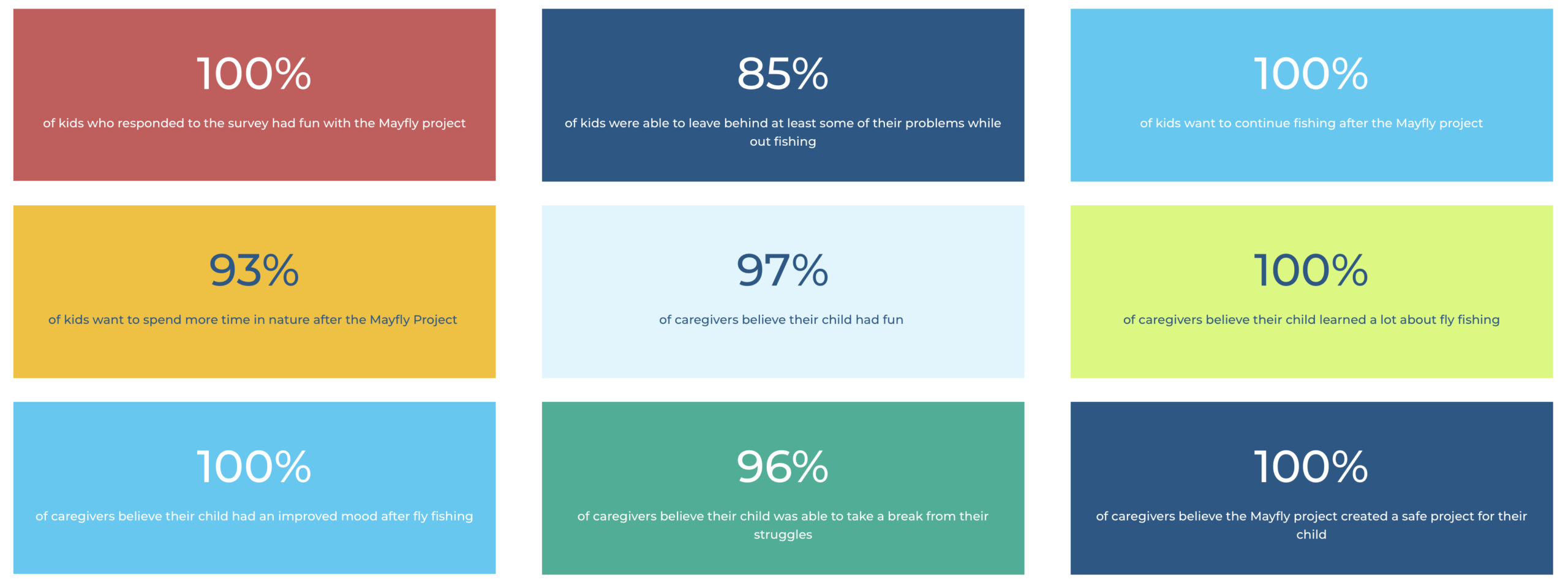
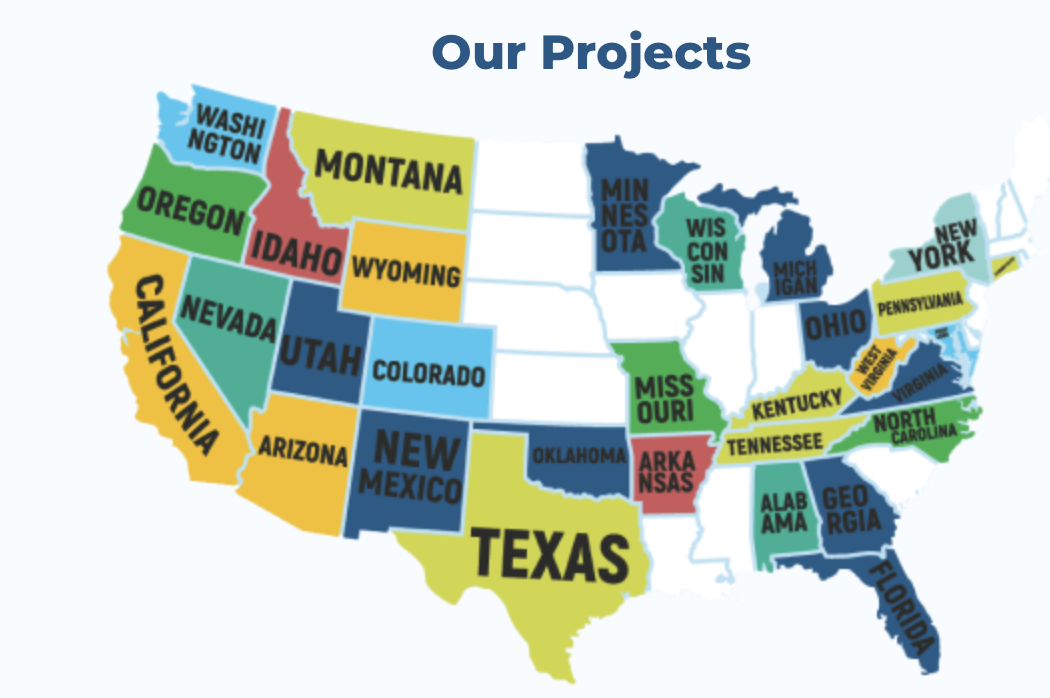
The Mayfly Project has started a new project in Eugene and we’re actively recruiting fly anglers who would like to serve as mentors.
The Mayfly Project is a 501 (C)(3) that uses fly fishing as a way to support and encourage children in foster care. Kids learn the basics of fly fishing, spend time outdoors, build confidence, and- most importantly- develop relationships with consistent, positive adults.
These are kids who have often experienced more than their share of instability. Time on the river- with patient instruction, a few laughs, and the quiet rhythm of casting- can give them something positive and steady to remember.
You don’t need to be an expert fly fisher to be a great mentor.
We’re looking for kind, reliable adults who enjoy being outdoors, have some knowledge of fly fishing, and genuinely want to invest their time in kids who can benefit from having another good person in their corner.
Mentors go through an application process, reference and background checks, an interview, and training specific to The Mayfly Project. That training includes trauma-informed care and resources designed to help mentors create an environment where kids feel safe, supported, and free to have fun.
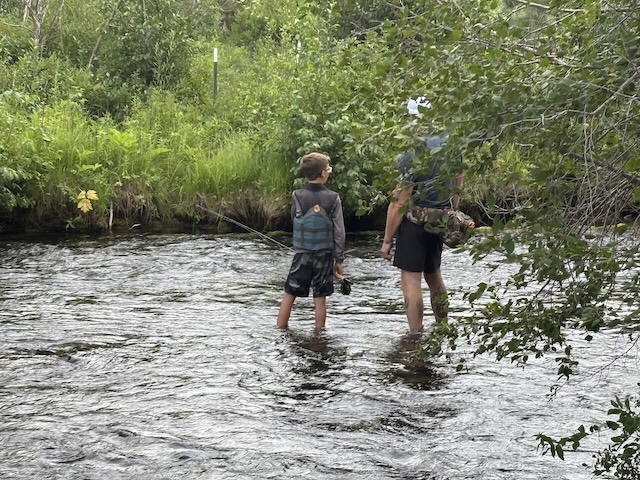
Wade wet wading with one of his past mentees
I’ve had the opportunity to mentor with The Mayfly Project since 2021 (Denver & Bend) and I’m excited to build something here in the Eugene/Springfield area. Oregon has an incredible fly-fishing community, and I believe we have the people here to create a really special program for local youth.
If spending some days on the water teaching a kid to cast, tie knots, catch fish, laugh a little, and simply enjoy being outside sounds worthwhile to you, I’d love to hear from you.
Interested in becoming a mentor or just want to learn more?
Grasshoppers become a staple in a trout’s diet in the late summer. Trout will often move several feet to pick up a hopper off the surface. This has given rise to the term “Hopper Season” referring to this late summer period.
Many people don’t know that there are countless species of grasshopper that range in size; not all adult grasshoppers are the same size. Hoppers typically start out smaller early in the terrestrial season and get larger as the weeks pass. Because of this, trout can be keyed in on a certain size of grasshopper. Many hopper patterns are larger than what trout are actually keyed in on. There are also tan and green crickets that can resemble small hoppers; this is why having a selection of smaller hoppers in your box is crucial.
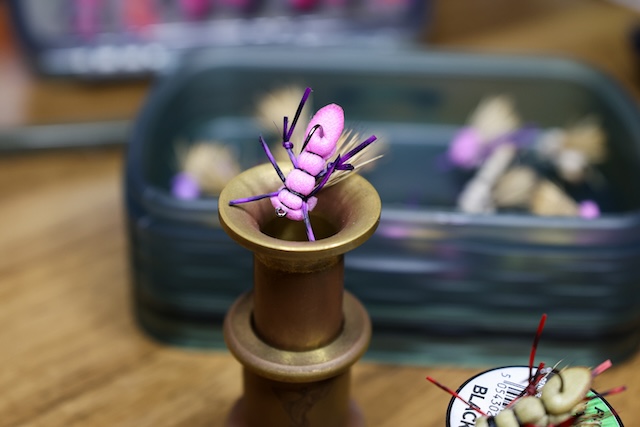
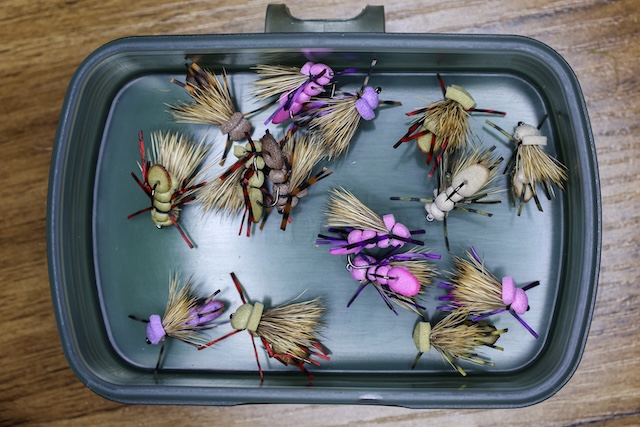
This hopper was developed to solve this very issue. Smaller species dominate certain areas, or you may be catching the larger hoppers earlier in their development, so a small pattern is necessary. This pattern features knotted realistic legs, a segmented underbody, and a realistic elk hair wing. The knotted legs and especially the segmented underbody shows trout an especially realistic underbody. This is perfect for finicky trout. This pattern can be sized up or down, and colors can be changed to best match the insects currently in your area. I like to tie these in a variety of colors including: pink, purple, brown, black, and tan.
When most people think of fly fishing, they imagine someone on a tranquil floating stream searching for trout with dry flies. Almost like something out of A River Runs Through It. While this may be true for most people who pick up a fly rod, there are many sub disciplines within the sport that look drastically different from one another. One of these that not only varies in technique, but also scenery is stillwater fly fishing. Stillwater fly fishing refers to an entire fly fishing discipline centered around fishing lakes, hence the name “still-water” angling.
A stillwater specific rod varies from your traditional fly rod. While your standard 9′ 5wt can work for fishing lakes, a stillwater specific rod always outperforms a 590. Lake anglers need to account for afternoon wind and rods must be able to punch through wind on an open lake. These rods are powerful and responsive, typically they are 10′ for additional power and reach. These rods must be especially responsive for subtle eats on chironomids with indicator setups. Fish on lakes have plenty of time to scrutinize flies and presentation before deciding to eat subsurface, so having a rod that can set a hook quickly is imperative. The extra reach of a longer rod really helps with these quick hooklets. Lastly, for fishing dry flies, a lake rod must be delicate. lake fish working the upper water column are easily spooked. Presenting a dry fly to finicky lake fish requires a tool that is accurate, precise, and delicate.
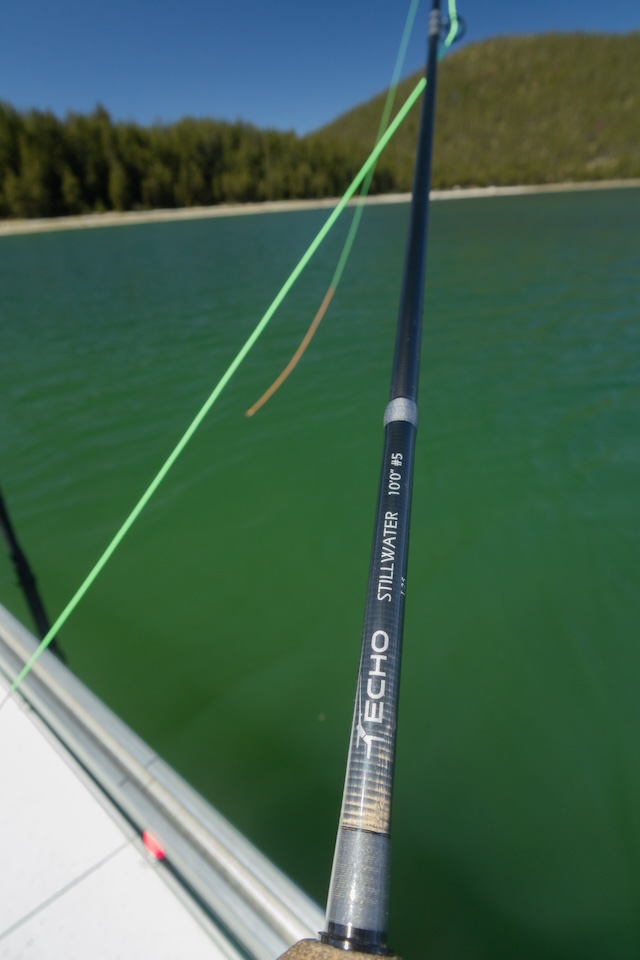
Adison Rook, stillwater guide and friend of the shop, and I ran out to east lake earlier this year to test a handful of new products. Two of them being designated lake rods from our friends at Echo: The Lago and Stillwater. We had two fantastic days fishing these 10′ 5wt rods with a variety of lines and utilizing several techniques with both. We both were impressed with them and the following breakdown reflects both of our thoughts. Leaning into Adison’s years of stillwater experience was especially helpful.
Aside from testing rods and lines, we had a phenomenal time up at East catching everything but the elusive brookies that still call the lake home. We caught fish using every technique from dunking chironomids under an indicator, fishing dries, stripping nymphs, fishing loch style with a drogue, and more.
Echo Lago
Starting with the Echo Lago, we both were especially fond of this rod. Retailing for $400 it is the more affordable of the two rods, but does not lack in its capabilities. The rod had a deeper flex and more feel, something that some anglers prefer. Over time, rods have gotten more powerful and faster action. For people who have recently picked up fly fishing in the last few years, they may prefer something that is faster action and feels more familiar. For long time anglers, the deeper flexing blank of the Lago may feel just right to them. The Lago comes 10′ options and ranges from 5-7wt. This has you covered from small alpine lakes, all the way to the behemoths of pyramid lake.
In terms of capability, this rod doesn’t sacrifice much with its more moderate action. In fact, it is especially good for subtle adjustments and its softer tip makes presenting dry flies delicately a breeze. Adison and I both enjoy medium to medium-fast rods and were particularly fond of the Lago as an all around lake stick. The rod kept up with its more expensive counterpart for virtually everything; each rod had specifics they excelled at. Taking a close look at what you like and how you will use the rod most will help you decide which is right for you.
For anglers with a dedicated watercraft, the Lago is nice because you don’t have to work as hard casting from the bank. The beauty of having a boat or tube is that you can move to where the fish are, this means no more hero casts from the bank. Although the Lago makes a better bank rod than your standard 9′ 5wt, the Stillwater’s power would make a better option if you are solely fishing from the bank. The Lago can definitely hang, but you could make hero casts for longer before tiring with the Stillwater than compared to the Lago from the bank. The Lago is superior for making close, delicate presentations of dries from a boat, or fish cruising close to the bank. Its mid flex allows it to delicately place small dries on the surface compared to its faster counterpart.
Echo Stillwater
The Stillwater is a powerful beast, and a phenomenal stillwater rod. Retailing at $525, it is slightly more expensive than the Lago, but has a significant bump of power, and much faster action. For especially windy days, large flies, cumbersome rigs, and sinking lines, the Stillwater is a fantastic choice. Not because the Lago cannot do those things, but because the Stillwater can do it for more hours, with less effort. Its innate power and faster action makes the rod have a significantly quicker recovery time. These attributes make the Stillwater more accurate as well, especially in subpar conditions where the weather acts up, which is especially common on open lakes. The Stillwater comes in 10″ 5-7wt and has an extra size of 10’6″ 6wt, which is one extra configuration compared to the Lago.
Despite its fast action, the Echo Stillwater does still have ample tactile feedback into the cork, allowing for a solid rod-angler connection through touch. Some especially fast rods completely sever this connection and often earn the title “broomstick”. The Stillwater navigates this plane well and is still intuitive for anglers who are looking for this in-hand feedback. The Stillwater cans till lie out a dry fly delicately, despite its fast action. If you solely fish terrestrials and callibaetis dries on lakes, the Lago may be for you. However, on especially windy days, the stillwater will be able to punch through the wind better. Also on windy days, the chop can act as an insulating layer between your dry fly presentation and finicky stillwater trout.
The Stillwater, being a more powerful rod, really excels at turning over sinking lake lines. If you’re a big streamer junkie on lakes, the Stillwater is likely the rod from you. If you are angling from shore, and have back cast room, the Stillwater will provide more reach with less effort than the Lago.
We fished a variety of lies on both rods, all being 6 weight lines. For indicator lines, we fished the Rio Phil Rowley Indicator Lake Line and the Scientific Anglers Anadro Indicator both in 6 wt options. Both rods handled this line exceptionally, with the Lago getting a deeper flex from these large, long headed lines. When loch style fishing with a drogue, we fished Phil Rowley’s Midge Tip Long, which is an intermediate sink tip line. Again both rods preformed exceptionally, with the Stillwater handling the extra mass of the sinking line marginally better than the Lago.
We ran Scientific Anglers Textured Infinities for dries, which dampened the power both of these rods had. Lake/indicator floating lines are great for fishing subsurface, but can be a little splashy for delicate dry fly presentations. Both rods were happy with this line. If you wanted to run a true dry fly line, the Lago would handle a more subtle taper like that better. If you hunt for fish on lakes with heavy sinking lines and streamers, the Stillwater is 100% the rod that you’d want. Its action and power is best suited to turn over heavy lines that get down deep fast.
With both rods being entirely capable of covering all of your stillwater needs, it can be hard to pick one as king. Choosing between the two really depends on your preference of rod feel, techniques you prefer and corresponding lines, price point, and your local stillwater venues and typical weather. Either rod is a phenomenal choice and will provide a significant improvement from fishing a standard 9′ 5 or 6wt on a lake.
If you’re curious about checking these rods out, swing by the shop and see for yourself. If you’re out of state, feel free to give us a ring and pick our brains if you have additional questions.
As always if you have questions or comments, feel free to chime in below.
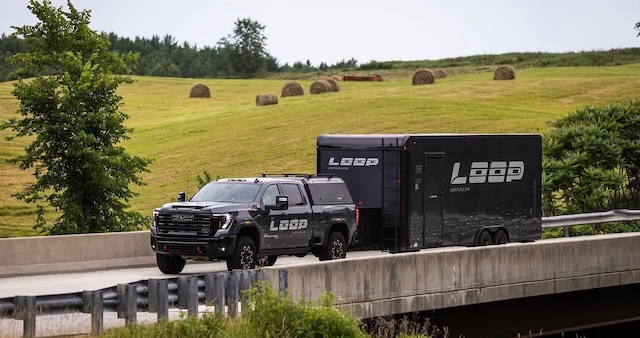
We are pleased to be one of Loop Tackle’s stops on their 2026 country wide tour! Loop is a Swedish fly fishing equipment company that creates high performance products that are known worldwide. They are coming to town and want YOU to be a part of their upcoming stop!
If you all haven’t seen on social media, our friends at Loop have been going on a pretty serious country-wide tour in a very kitted out loop truck and trailer rig. They have been stopping at countless shop, fly fishing shows, famous rivers, and more, and we are excited to be a part of it! It is not uncommon for companies in and out of the fly fishing industry to go on road tours, but not all large companies involve the community. YOU all are invited to come hang out at the shop, cast rods, eat, drink, see the newest products, and hang out with the Loop crew!
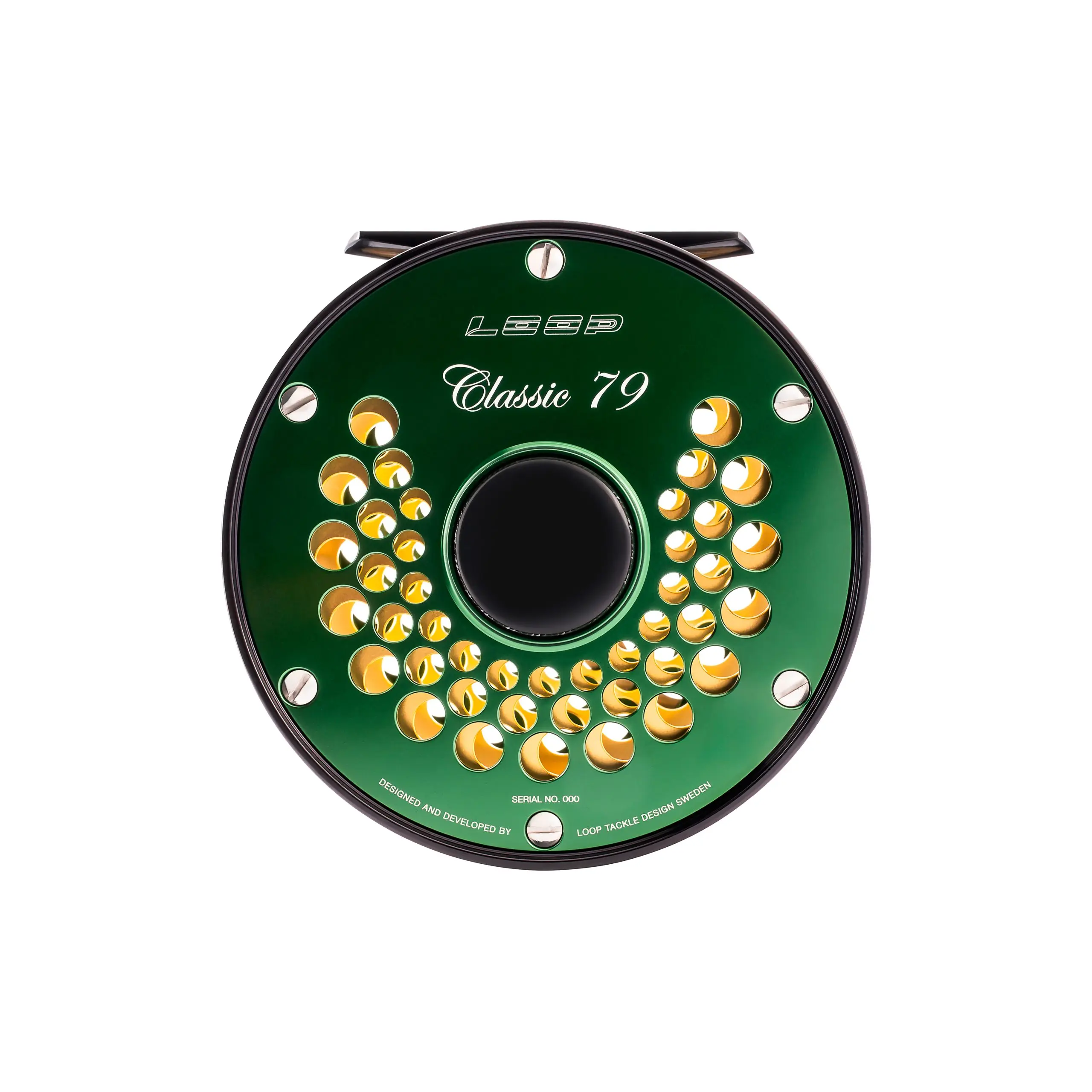
The reel up for auction is this gorgeous Loop Classic 7-9
We will be auctioning off a pretty sweet Loop Classic 7-9 spey reel in a gorgeous ducks green color. This reel would make a fantastic addition to just about any two handed setup for swinging. The 7-9 range covers many bases in terms of two handed rod configurations. Their solid frame with ported spool is an homage to the classic reels of the past packed with today’s technology. Tight tolerances and a fantastic click makes this a fine piece of equipment. The only thing left to complete it is a wild steelhead peeling line making it sing.
We will be hosting the event right here at the shop. Whether you are a long time avid loop fan or someone who wants to learn more about Loop Tackle, all are welcome! Not to mention you also have the chance to win a pretty sweet two handed reel! This is also a fantastic opportunity for those new to the sport to come by a local event and connect with their local fly fishing community. Fly fishing and tying certainly can be a solitary sport, but opportunities like this are a fantastic way to meet likeminded folks.
Help spread the word, and save the date. The more the merrier!
Details
What: Loop Road Tour Event: Pop up at Caddis Fly Shop
Where: Caddis Fly Shop 168 W. 6th Ave Eugene, Oregon
When: September 18th 2pm-5pm
What: Auction for Ducks Green 7-9 Loop Classic Spey Reel, cast loop rods, learn about Loop Tackle, beer, BBQ, hang with the loop crew, check out the newest Loop gear, an excuse to hang at your favorite fly shop!
Auction: Auction for Ducks Green 7-9 Loop Classic Spey Reel